
| Martin Luther by Scott Hendrix. Martin Luther started the Protestant revolution in 1517 when he posted his ninety-five theses at the Wittenburg Castle Church. Though he built this revolution on his theological treatises and sermons, he made a point to add music to his programs -- noting the special impact of music on the emotions -- and wrote over thirty hymns, the most famous being "A Mighty Fortress is Our God." Over two million copies of his songs were printed in these early years, and some give more credit to his hymns in spreading this revolution than to his theological writings:
"Among God's most precious gifts, Luther ranked music second only to theology. Analyzing and debating the faith was mainly for theologians, while for laypeople music was the most effective means of transmitting the gospel. In 1620, a Jesuit critic paid Luther's hymns a backhanded compliment by claiming they exterminated more souls than all the reformer's sermons andwritings. By the time Luther died, the number of laypeople who sang Luther's hymns far exceeded the number who heard his sermons or read his pamphlets. In north Germany evangelical hymns in the Low German dialect were already published in 1523, the same year that Luther's musical tribute to the early martyrs appeared in Wittenberg. By the end of that year, broadsheet versions of Luther's earliest hymns were circulated and sold by itinerant craftsmen and peddlers. InMagdeburg one enterprising cloth-maker stationed himself beneath the statue of Emperor Otto I, sang aloud two of Luther's early hymns, and then sold copies to the crowd he attracted. For being a public nuisance or hawking without a license, the cloth-maker was arrested and jailed until 200 citizens demanded his release. On May 22, 1524, the townspeople petitioned the magistrates to allow evangelical sermons, and in late June Luther visited Magdeburg for the first time since 1506. After Luther's visit the city council allowed not only evangelical sermons and hymns but also the reception of both bread and wine in the Lord's Supper. In late September Luther sent Nicholas Amsdorf to supervise reform in Magdeburg, which became the first officially evangelical-Lutheran city in northern Germany.
"The importance of hymns to the growth of the reformation cannot be overstated. |

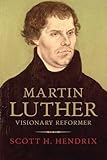
Martin Luther: Visionary Reformer
Author: Scott H. Hendrix
Publisher: Yale University Press
Copyright 2015 Yale University
|


No comments:
Post a Comment